The Archives


Wednesday, October 22, 2014

Reasons to celebrate: Two stories about Armenians, and they both end happily

The original Men of Granite, the 1940 Granite City basketball team
I have a deal with my friend Stuart Alson, an independent movie distributor, producer and film-festival impresario: I write stories for his magazine, and he introduces me to interesting people in the film industry.

He’s always on high alert for Armenians, and that’s how I met Valerie McCaffrey—at least by telephone.

McCaffrey is well known as one of Hollywood’s top casting directors. She’s a bit less well known as an Armenian from Fresno, California, and our conversation convinced me that really needs to change.

The main topic of our chat was the film comedy Lost and Found in Armenia, which McCaffrey produced along with Maral Djerejian. It debuted in America last year but it’s about to get even wider international distribution through Stuart’s company.

I’d heard good things about the film, but my wife and I didn’t have a chance to see for ourselves until it popped up on Netflix recently. I recommend it highly by the only standard I ever apply to a comedy: I laughed.

Jamie Kennedy plays an American vacationer who drops in (quite literally) on an Armenian village. He is mistaken for a spy and interrogated in a language he can’t identify much less understand.

It’s a sure-fire setup, as the misunderstandings multiply. At its core, Lost and Found in Armenia is a simple fish out of water story, which is appropriate for a landlocked country. But nothing is quite so simple in Armenia.

Amid the humor, the audience gets a feel for the anxieties of a people whose history of turmoil and foreign conflict is contemporary as well as ancient. A scene later in the film makes it clear the villagers’ fears of incursion are not mere paranoia.

In all, Lost and Found in Armenia presents Armenians as real human beings in a real place, and it leaves the audience smiling. It’s a big plus for a country that gets little notice except in connection with controversy or tragedy.

McCaffrey had been to Armenia before but this extended stay made a deep impression. In village after village, families living in the humblest homes without so much as indoor plumbing insisted on sharing their bread, as well as their home-made vodka.

“We really should be more like these people,” she said. “They appreciate human life and relationships, and they love each other. I teared up at the end.”

Her next project isn’t an Armenian film, but it has some powerful Armenian elements.

Men of Granite tells the real-life story of a high school basketball team from Granite City, Illinois, a steel-mill town crowded with immigrants from Eastern Europe.

Just making the team was a triumph for these young men. Their parents may have been good enough to stoke furnaces, but no one believed kids with foreign-sounding names like Hagopian and Markarian could play such a fundamentally American game.

As it turned out, they played brilliantly: Granite City won the state championship. One of the players, Andy Phillip—of Hungarian descent—went on to become an NBA All Star.

The Armenian connection extends even deeper than several team members. The film is based on a book of the same name by retired Milwaukee Journal Sentinel sports writer Dan Manoyan, and the script is by Armand Kachigian.

They may not be marquee names yet, but the movie is set to star William Hurt as the coach, and Shirley MacLaine as the teacher who played an important part in the players’ lives.


I’m eager to see it, and to cheer for the kids from Granite City. I’m already cheering for Valerie (Boolootian) McCaffrey, who is helping Armenians tell the kind of stories we need to hear more often. 

Tuesday, October 14, 2014

Democracy in action: What happens when the press does its job but the voters don't do theirs?

Would you trust either of these guys?
Idealists see election coverage as a journalist’s highest calling, exposing fools and frauds while delivering vital information that allows the voters to make an intelligent choice.

Of course, that assumes there is an intelligent choice to be made and that voters will manage to figure it out.

I’m always mindful of the great journalist and skeptic H.L. Mencken’s observation about democracy: With more than 100 million Americans to choose from, some of whom were actually smart and capable, we ended up with Calvin Coolidge in the White House.

Still, I always thought covering elections diligently was at least worth a shot even if it was the sort of shot you have to bend over for.

Covering an election is an awful lot of work, even if you’re not on the campaign bus. Reporters and editors spend months tracking down candidates, tracking down rumors, tracking down photos, tracking down campaign reports.

There’s so much tracking involved that you could almost mistake the ballot for the FBI’s Most Wanted List. Occasionally, at least, there’s not much difference.

We’re in the final weeks of a gubernatorial campaign here in Florida where honesty is the big issue. Unfortunately for all of us, neither major candidate has the edge in that department.

The two big names are the current Republican governor, Rick Scott, and a former Republican governor, Charlie Crist, who was an Independent for a while and is now a Democrat.

After decades in Florida politics, Crist remains buoyant, energetic and charming. There has never been a hand within a hundred yards of him that he didn’t shake, and shake again.

As governor, he was conservative enough to be seriously considered as a vice presidential running mate by John McCain. When that didn’t work out, he was pragmatic enough to hug President Obama—quite literally. 

The photo helped get him flattened by a Tea Party steamroller named Marco Rubio when he decided to run for the Senate in 2010 instead of seeing reelection as governor.

The more consistently conservative Scott was elected governor that year. He looks like a corporate CEO, which is exactly what he was. Scott does not have Crist’s charisma but he does have more than $100 million. That helped him get elected but he never quite won the hearts of the state’s voters.

Scott’s approval rating has never topped 50 percent, which helped convince Democrats that a re-branded Crist could beat him. The polls all underscored that judgment until Crist won the Democratic nomination and the two faced each other head-on.

Since then, Scott and Crist haven’t so much been slugging it out as spitting on each other. It’s an effective way to make your opponent look slimy but it has some pretty obvious drawbacks.

Crist’s campaign reminds voters that Scott started and ran a health-care company that pleaded guilty to Medicare fraud on a scale so vast it was fined $1.7 billion. Scott, who wasn’t accused of a crime, said he would have stopped the scheme but he had no idea what was going on even though he was in charge.

Would you put that on your resume?

Scott’s campaign points out that as governor, Crist got mighty cozy with high-flying attorney Scott Rothstein, who is now serving a 50-year prison term for running a Ponzi scheme.

At one point, Rothstein paid $52,000 to put a candle on Crist’s birthday cake. In return, Crist let Rothstein help blow them all out, setting up another haunting photo op for the Scott campaign.

The bigger problem is that Crist appointed Rothstein to a panel that selected judges. Rothstein later boasted that his influence over Crist allowed him to buy a seat on the bench for his favored candidates.

That might not be true, but the slime ads for both sides are extremely effective. One major poll shows that four in 10 voters think both candidates are crooked, and voter disapproval of each one exceeds even that bleak assessment.

The result is a near dead heat between two candidates nobody much wants or trusts. What’s troubling is that none of the questions that seem to bother us now are new.

The press did its job in exploring and exposing these foibles and follies on both sides, but one of them will be elected governor regardless.

It's easy to blame the bozos who put them on the ballot except for that messy complication of democracy: The bozos are us.

Tuesday, October 7, 2014

Here's a radical idea for fighting terrorism: Stand up for freedom of speech. Or is that just too much to expect from our government?


Why did he apologize for telling the truth?
Vice President Joe Biden has apologized to Turkey's President Recep Tayyip Erdogan for suggesting that Turkey helped encourage formation of the Islamic State terrorist network.

Biden created a fuss during a speech at Harvard University when he noted that the ranks of ISIS swelled as thousands of fighters crossed the border from Turkey to Syria. 

He said Erdogan conceded to him that this was a mistake and was now prepared to help America combat the ISIS offensive.

Biden's remarks drew swift condemnation from Erdogan, who not only denied conceding any such error but also denied the underlying facts.

As The Times put it, "Erdogan, despite widespread evidence to the contrary, denied that Turkey's long, porous border had enabled thousands of militants to cross onto the Syrian and Iraqi battlefields since the Syrian civil war began in 2011."

No one familiar with Erdogan's practice of inventing history and suppressing dissent would expect him to be deterred by the small matter of evidence to the contrary.

And no one familiar with America's mealy-mouthed policy toward Turkey would be surprised that Biden quickly backed down.

The Obama administration is trying very hard to persuade Erdogan to join the assault on ISIS (or ISIL or whatever they're calling themselves this week).

Instead, even as ISIS closes in on towns along the Turkish border, Turkey has ramped up attacks on journalists.

When the Times reported last month that Turkey continues to be fertile ground for ISIS recruitment, Erdogan's supporters took aim at the reporter. 

The Times noted that Ceylan Yeginsu, who is Turkish, received threats by email and social media. Two pro-government newspapers published front-page photographs of Yeginsu "and suggested she was a traitor and a foreign agent."

Erdogan's thugs showed disdain for America as well as for free speech when he met with Biden in New York on Sept. 25. Reporters from two Turkish newspapers that have been critical of Erdogan's government were evicted from the hotel and "manhandled" by Erdogan's bodyguards, according to Reporters Without Borders.

"Your existence is a crime," an Erdogan adviser told one of the reporters. 

Reporters Without Borders monitors media bullying around the world. It ranks Turkey a dismal 154th of 180 countries in its World Press Freedom Index.

Why would the vice president of the United States apologize for telling the truth about a regime with that sort of record?

Maybe we're just not the champions of freedom we used to be. Have we really become that scared, or that cynical?

I hate to think so, but I'm not so sure after looking at that index.

After all, we're only number 46.

Friday, October 3, 2014

I thought one day I'd own a hot, classic car. This one's actually cooler than you might think.

We each have a very personal vision of retirement.

You may picture your leisure years as one long pool party, or golf outing. Perhaps you’re the adventurous sort and plan to sky dive. Or maybe you’ll finally learn to tango, or speak French?

I always pictured myself driving an Oldsmobile.

All my working life, I thought I’d finally have the time to play with cars. Even one car would be fine as long as it was really fun, and that seemed achievable because my standard for fun was simple.

Any car with a V8.

When I was younger, I sampled the catalog of American cars available with four-barrel carburetors: Buick, Dodge, Mercury, Chevrolet.

I was a big Pontiac fan when Richard Petty drove Pontiacs. He won his 200th victory at Daytona International Speedway in a 1984 Pontiac Grand Prix that would have looked identical to mine if the one I bought came with racing stripes, a giant 43 on each side and Petty Blue paint.

But Oldsmobiles were at the top of my personal speed chart since I landed in the driver seat of a new 1969 442 the day I got my driver's license.

Say what you will about other advertising slogans, the Oldsmmobile Rocket V8 was aptly named—trust me on that. I rode Rockets on and off for years, adding a 1979 Hurst/Olds and a 1987 442 to the roaring roster of cars that came and went too soon.

I was such a fan (and good customer) that I received a treasured memento from the company in 1997—my own copy of Setting The Pace, Oldsmobile’s First 100 Years.  I still marvel at the evocative names that conjured up a glorious, limitless future for America, Olds and me: Futuramic, Starfire, Toronado.

Unfortunately, Oldsmobile came up short of completing its second century by 93 years. The last one chugged out of the assembly building in 2004.

Sure, there are plenty of Oldsmobiles still around, but what would I do with one? None of the models that appeal most would fit in our modern-scale garage, and the fuel mileage wouldn’t fit my retirement-scale budget.

Even if I wanted one for weekend joy rides, I’d face a formidable obstacle in the other retiree who shares the garage. She is much more sensible and feels money is best spent on practical items, which could be defined broadly but accurately as anything without spark plugs.

That’s not really a problem, as my automotive enthusiasm has waned over the years—and my enthusiasm for American cars out-waned the rest thanks to shoddy construction and bad designs.

The capper was when the power steering in my last Pontiac quit for good in rush-hour traffic. The car was all of three weeks old. Unfortunately for General Motors, the dealer that towed the car also sold Hondas. I sat in one while I waited. They had to pry me out, but it made a lasting impression.

I discovered that small cars with four cylinders can be as much fun as big cars with V8s, although fun of any sort is severely rationed on the tourist-jammed roads of South Florida.

As my wise friend David Blasco reminds me, the only reason cars here have engines is to run the air conditioner--and believe me, you do want to run the air conditioner.

None of it matters so much now that my commuting days are over. Thanks to our late and dearly missed Aunt Arpie, I now have the perfect car for a man of mature years.

I drive a tan Toyota Camry.

When Arpie quit driving, she sold me her 2002 Camry XLE. It really was the car of urban legend that an old lady drove to church on Sundays. Although it was nine years old, the Toyota was just inching toward 30,000 miles.

Three years later, I’ve managed to add just 15,000 miles to the odometer. The paint still shines, the seats look like new, and until the battery died last week the Toyota never failed to start.  

The four-cylinder motor doesn’t have all that much zip, but neither do I these days. In fact, the Camry and I are a perfect match: We both get around slow and easy, and we have plenty of company in doing so.

The Camry is a very popular car among South Florida’s large retiree population, and tan seems to be the color of choice. It’s not unusual to be driving along behind one and in front of another.

It’s like driving the cool kids’ car in high school, except the cool kids are all 85 years old.

That’s OK with me. I have no problem driving this car, but I do have a problem parking it. The problem is that there are so many just like it everywhere I go that I have to click my way from car to car trying to figure out which one’s mine.


A tan Camry wasn't my vision of retirement, but it sure seems to be everyone else's.

Wednesday, September 24, 2014

Impressions abound in The Trip To Italy, but not the impression Lord Byron left on Armenians


My wife and I took an afternoon off to see The Trip To ItalyIt’s the sequel to The Trip, which also starred British comedians Steve Coogan and Rob Brydon. 

They are odd films: no vampires, no zombies, no comic-book villains from space. That suits me just fine. 

Both Trip movies share a simple set-up: Coogan and Brydon are commissioned to take a dining-and-travel tour. Along the way, they engage in an ego-driven competition to top each other’s impressions of famous actors and movie scenes. 

They often perform the same scenes over and over. The effect is sometimes hilarious, sometimes annoying—and frequently both.

If you find Brydon’s Pacino voice grating, you could wear earplugs and still enjoy The Trip To Italy because the scenery starts off gorgeous and keeps getting better as they wend their way from Genoa to Tuscany and along the Amalfi Coast. 

But then you’d miss the witty historical and literary allusions sprinkled among the Godfather and James Bond references. 

The Italy trip is framed as homage to Percy Bysshe Shelley and Lord George Gordon Byron, who wandered these same paths together a couple of centuries earlier. 

As a long-ago English major, I instantly recognized the importance of these two giants of English poetry—and as a true American, I couldn’t remember a thing either of them wrote. 

But I did remember one fact that the screenwriters either didn’t know or didn't find interesting: Lord Byron spoke Armenian

This is not a small point, at least to me. I don’t speak Armenian, although my parents did—and as did everyone in their lines from antiquity on until I came along. 

I’ve always used the excuse that as a writer, English deserved my undivided attention. The Byron example shoots that all to hell as he’s considered one of the greatest poets in English history. 

I take solace in this, however: Byron had time to study Armenian without intrusion because he was on the lam. The Romantic poet was a bit too romantic for the England of his day, and he sailed to the Continent for a respite from scandal. 

He found inspiration as well as solitude in Venice in 1816 when he discovered the Armenian monastery on the island of San Lazzaro. A group of Armenian Catholic monks had established themselves there the century before to carry on their own work in exile. 

The Mekhitarists, named for their founder, dedicated themselves to preserving Armenian culture outside the hostile environs of their occupied homeland. They translated classical Armenian works into European languages, and European literature into Armenian. Among their most valuable contributions to the world was the restoration of ancient Greek texts that existed only in Armenian after the originals were lost. 

The monks also welcomed students who had the discipline and determination to meet their high standards. Byron confessed that he was initially attracted to the intellectual challenge as a diversion, but he quickly became an enthusiastic admirer of the Armenian people and their language. 

“Whatever may have been their destiny–and it has been bitter–whatever it may be in the future, their country must ever be one of the most interesting on the globe, and perhaps their language only requires to be more studied to become more attractive.” 

Byron noted that some Armenian students had difficulty mastering the written language (“a Waterloo of an alphabet”) but he became so adept that he translated Armenian historical writings and the Epistle of St. Paul to the Corinthians into English—and he wrote poetry in Armenian, introducing the Western form to Armenian poets who followed. 

He remained in San Lazzaro until the next year before moving on to Rome, where he completed some of his finest poetry. His friend Shelley joined him in Italy, and they rented a house on the coast south of Genoa.

Their Italian adventure ended tragically: Shelley drowned when his boat overturned in 1822. He was 29. Instead of returning to England, Byron headed to Greece to join the war for independence against the Turks.

I wonder if he was inspired by his study of Armenian history, which led him to conclude that “the pashas of Turkey have desolated the region where God created man in his own image . . .” 

Byron lent his fortune as well as his life to Greece, where he became ill and died in 1824 at age 36. 

He is honored by Greeks to this day, and by Armenians. A portrait of Byron hangs outside the room he occupied in the monastery of San Lazzaro, where the Mekhitarist fathers continue to do their holy work.

A plaque at the entrance honors this "devoted friend of Armenia who died for the liberation of Greece."

Monday, September 15, 2014

Jack Knight ordered his staff to print the truth. The result was success for his paper and its city. Those days are long, long gone.

John S. and James L Knight as the Miami Herald
building on Biscayne Bay opened in 1963
Day-old newspapers have always been throw-away items, supremely useful as garbage can lining. 

Who knew that newspaper companies would become equally disposable? 

I got to thinking about this when I read in The New York Times that a company called Digital First Media is up for sale. The story described Digital First as a “struggling collection of 76 daily newspapers” from across the country. 

Among the papers are such once stalwart names as The Denver Post, the St. Paul Pioneer Press and the San Jose Mercury News. It was the last name that caught my attention for reasons I’ll get to after I wallow in a bit of newspaper nostalgia.

My generation identified newspapers with the men who owned and ran them: Hearst, Patterson, McCormick and the rest. Although many of the founders’ names remained on mastheads when I entered the business in the 1970s, ownership had passed to heirs who lacked the fire (or in some cases, the brains) to keep control. 

By the 1980s, corporations owned most major papers and a lot of smaller ones. Many old hands warned about the creeping influence of narrow-minded accountants who emphasized quarterly profits and stock prices over crusading journalism. 

The old hands were right. I stayed in the business long enough to see the effects of corporate penury, not only on journalism but on the journalists who got tossed out like tattered scraps of old newsprint. 

But I got into the business in time to catch the final glimmer of the glory days, and the brightest was during my time at The Miami Herald. 

Back during Miami’s first era of dizzying growth, The Herald worked hard to burnish the city’s tropical-paradise image and cashed in on the bonanza of land-boom advertising that followed. 

Then in the 1920s, the entire region was staggered by devastating hurricanes, followed by The Great Depression. The vacuum created by fleeing tourists and homesteaders filled rapidly, as casinos and bordellos displaced cabanas and beach umbrellas. 

Prospects for recovery appeared dim for both The Herald and its home city when John and James Knight came to town in 1937. The Knights, scions of an Ohio newspaper family, had the money to rescue the paper. 

More important, they had a vision that would help do as much for the city. 

They hired the best editors and reporters they could find, and Jack Knight gave his staff a simple mandate that stands as the best damned definition of journalism I’ve ever heard: “Get the truth and print it.” 

The Herald began a long, distinguished tradition of exposing corruption and making life miserable for the corrupt. The paper won its first Pulitzer Prize in 1951 for its fearless exposes of organized crime.

The tradition of tough, honest journalism embodied by the Herald and the Knights’ other papers across the country was very much alive when I was hired to work in the Herald’s Fort Lauderdale bureau in 1978.

But the final phase of the Knight era had already begun: In 1974, the aging Knight Brothers merged with the Ridder newspaper group to form Knight-Ridder. The former Knight papers formed the solid core of the new company, and the Herald building on Biscayne Bay became the chain’s national headquarters. 

I know nothing about the corporation’s internal politics, but influence seemed clearly to shift from the Knight faction to the Ridders after Jack Knight died in 1981. By then, Miami was again struggling with a tarnished reputation. The region was still growing, but not many newcomers could read English. 

In 1995, Tony Ridder became chairman of Knight-Ridder, and in 1998 the chain’s headquarters moved from Miami to Ridder's home base in San Jose, California, where he had been publisher of the San Jose Mercury News. 

I was long gone from The Herald by then, but the praises of San Jose, awash in the prosperity of Silicon Valley, were sung loudly enough to be heard by anyone who’d listen. This new era, the Ridder Era, began with great promise. 

It lasted a mere eight years.

With the entire industry reeling from deep losses in readers and advertising, Ridder arranged to sell all 32 Knight-Ridder newspapers to the McClatchy Co. in 2006 for $4.5 billion. McClatchy immediately began selling off as many of the properties as it could for whatever they'd fetch. 

As a result, Knight-Ridder ceased to exist. 

The McClatchy Co. did keep the Miami Herald, or at least the name. The new owners sold the paper’s Bayfront building to a Malaysian development company that planned to replace it with a casino. 

The paper’s staff and circulation were downsized to fit the current profile of print as an Internet adjunct. What remained of The Herald was moved to a government surplus building in nearby Doral. 

Abandoning the iconic Bayfront offices the Knight Brothers built along with the city they embraced probably makes as much sense as the rest of it, especially to people who think primarily of newspapers as brands to generate profit. 

I used to disparage such people but they’re not worth the trouble now, as it’s clear they won’t be around the business much longer. Unfortunately, the business will probably be gone with them. 

Digital First Media’s newspapers had all once been independent or owned by major chains but were scooped up in recent years by investors who thought there was still money to be made in the print-news business. That prospect is now so slim that there’s real concern about whether a buyer can be found for Digital’s news portfolio even at a bargain price. 

The Times story noted that a sale had been expected because the Digital chain is in turn owned by a hedge fund. I’m not entirely certain what a hedge fund is, but I’m pretty sure I’d rather work for Jack Knight. 

Tuesday, September 2, 2014

Does this man look white to you? Maybe we should have a national conversation about it.

Oregon Historical Society
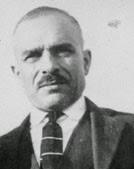
Tatos Cartozian
Oregon Historical Society
I usually zip through the opinion pages of the New York Times, but a headline on a recent column by Nicholas Kristof stopped me cold: When Whites Just Don't Get It
Kristof noted that many white people say they're fed up with coverage of events in Ferguson, Missouri, where a white police officer shot and killed a young black man he suspected of shoplifting. 
The shooting was followed by demonstrations, which were followed by looting. Teenagers with cell phones used social media to post dramatic images that would never get past jittery editors. As a result, the story was driven faster and farther by YouTube, Twitter and Instagram than by newspapers and TV. 
Cable networks did their best to catch up by filling air time with speculation, commentary and guesswork presented as expert opinion. A common theme was that events like those in Ferguson would be less frequent if we could have national conversation about race. Then we’d all understand each other much better. 
Kristof echoed this sentiment. His column offered a grab-bag of factlets about income, crime and education to argue that blacks have serious grievances that white people should listen to, and respond to, for the good of the country. 
What struck me about this two-sided conversation idea was the outdated premise. This just isn’t a starkly divided black-white country any more. According to the last census in 2010, non-Hispanic white people accounted for an all-time low 64 percent of the population. Blacks were just under 13 percent. 
That means a whole lot of people—nearly one in four—simply don’t stand clearly on either side of what we consider America’s racial divide. 
In fact, many more never did. 
This was driven home when I was researching the Armenian experience in America and came across the federal government’s attempt to keep America white by shutting Tatos Cartozian out. 
Cartozian was an Armenian immigrant who settled in Oregon. He became a naturalized American but the federal government tried to revoke his citizenship. It accused him of falsely claiming to be a white man. The back story to Cartozian’s 1924 federal court case fascinated me. 
Way back in 1790, George Washington signed a law limiting naturalized citizenship to white people. The law didn’t define white except by noting that the term was commonly understood, which was certainly true when nearly everyone on the continent was either of European or African descent except the Indians. As America grew, so did the challenge of deciding just who was white. 
Immigration clerks squinted harder and harder throughout the 19th century as they looked up at the swarthy faces of Italians, Spaniards and Jews. It was left to the courts to assign each ethnicity a place on the American color chart. 
Armenians were among the final ambiguities. Look at us and you’ll see why. Our history of invasion, subjugation and migration has produced a rich palette of skin tones as well as a wide variety of facial features. 
So the Cartozian case involved testimony from anthropologists, historians and certifiably white Americans who testified that Armenians displayed the character traits of white people even if they didn’t always show the physical traits.
Cartozian won. That decision was a big legal step forward for Armenians who’d had no right to citizenship or any legal protection at all in the land of their ancestors. 
But what does it mean today? In the narrowest sense, it means I am considered a white man. So is Kristof, whose father was an Armenian from Poland. Their family name was originally Hachikian. 
In a broader sense, it means I am invisible. My identity is smudged into that 64 percent majority, along with Greeks, Turks, Arabs and so many others who look nothing like Astors or Vanderbilts. 
Unlike Hispanics and Asians, who are far more numerous, Armenians have no minority status. No special protection, no preference, no affirmative action—not even a box to check on the census form. 
The reality of America is that all of us identify ourselves—and are identified by others—in many ways. Yet we also share a common identity that binds us into a nation. No matter the number, the shrinking white majority is an artificial construct as well as an anachronism and I refuse to let it define me. 
So while I have no objection to a national conversation about race, it can’t be two-sided or there will be no place for me and millions of others.